

Research Facilities
Real-time meteorological observation system: HKUST-FYBB #1 Satellite
The HKUST-FYBB #1 satellite represents a groundbreaking advancement in environmental monitoring, disaster forecasting, and sustainable development. As Hong Kong's first university to launch a satellite mission, HKUST aims to build a remote sensing satellite constellation for comprehensive data collection. It was launched on 25th August 2023. This multispectral optical satellite is among the most advanced civilian satellites available, featuring a remarkable spatial resolution of 0.5 meters—significantly higher than that of the European Space Agency's Sentinel-2. With a 150-kilometer image swath, it rivals the latest U.S. land satellites. The satellite's data will first support the creation of a digital twin system for monitoring Hong Kong's slopes, facilitating the simulation of landslide disasters and improving societal responses to emergencies. This initiative seeks to enhance decision-making and coordination in disaster management, paving the way for innovative solutions to address environmental challenges.
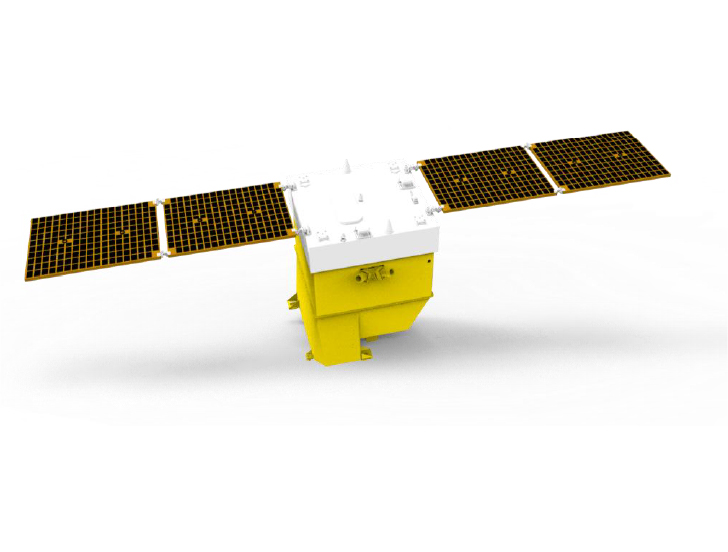
| HKUST-FYBB#1 | Parameters | |
|---|---|---|
| Mass | 215 kg | |
| Design Life | 5 years | |
| Orbit | Altitude | 535 km |
| Type | Sun-Synchronous | |
| Camera | Scan | Push-broom |
| Channels | Panchroma:450nm~700nm Blue:450nm~510nm Green:510nm~580nm Red:630nm~690nm Near-IR:770nm~895nm |
|
| Spatial Res. | 0.5m | |
| Swath | ≥150km | |
190-m-long Flume
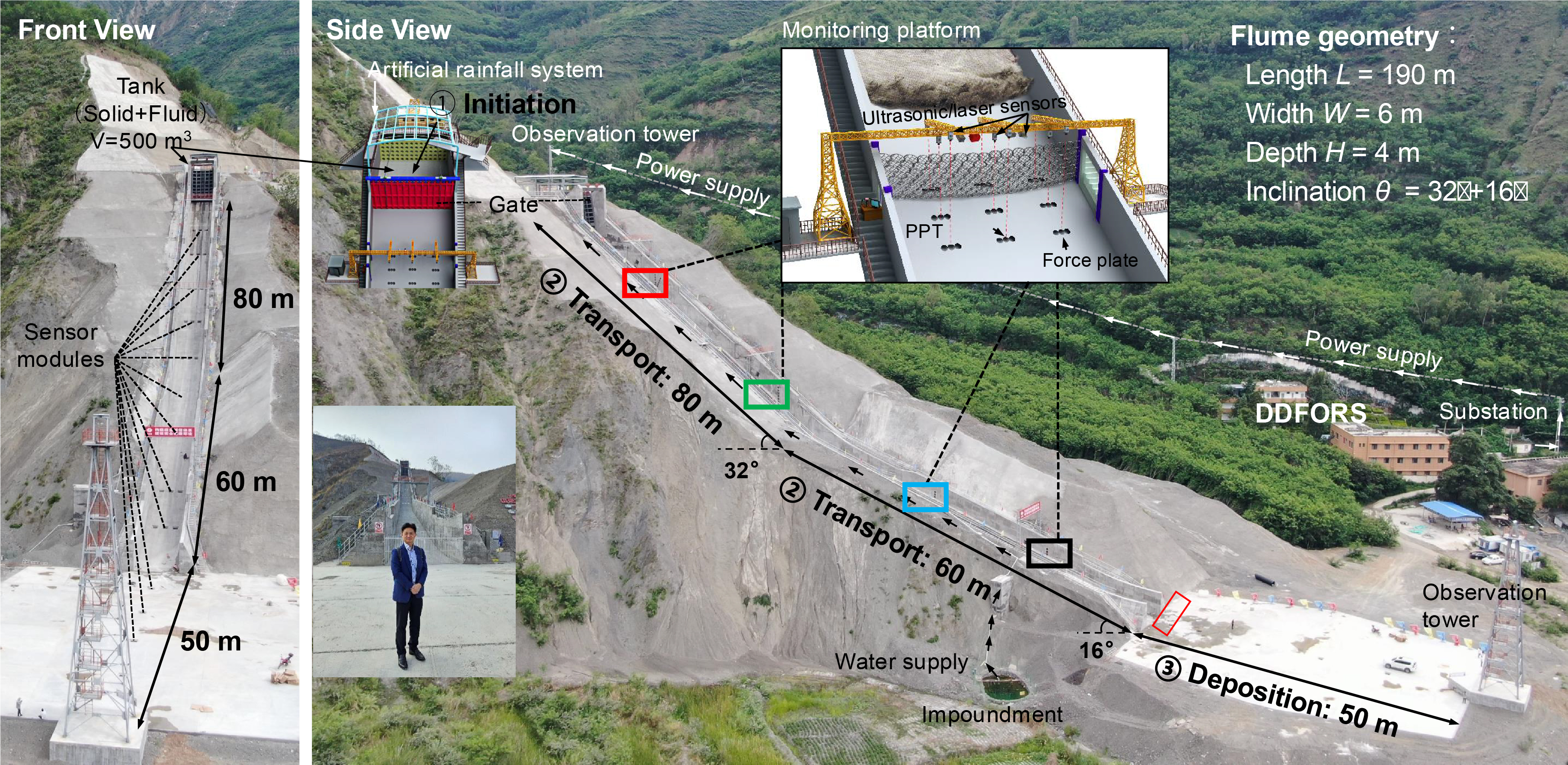
The 190-m long flume at Dongchuan Debris Flow Observation and Research Station (DDFORS) in Kunming, China, is the world's largest multi-functional flume facility for modelling mountain hazards. This state-of-the-art facility is the result of a collaborative effort between HKUST and Institute of Mountain Hazards and Environment (IMHE, CAS) and Huadong Engineering Corporation Limited (HEDC). With a width of 6 metres and a length of 190 metres, the flume is divided into two transport sections, inclined at angles of 32° and 16° respectively. The flume can model debris flow volumes up to 500 cubic meters.
Publications: Ng, C.W.W., Poudyal, S., Cui, P., Liu, H., Li, Z., Zheng, M., Jia, Z., Bhatta, A., De Silva, W.A.R.K., Zhou, G.G.D., Petrini, C., Denk, M. and Song, D. (2026) A 190-m-long flume for investigation of debris flow impacts on multiple flexible barriers. Géotechnique.
Geotechnical Centrifuge Facility
The Geotechnical Centrifuge Facility (GCF) is a university-level central laboratory of the Hong Kong University of Science and Technology (HKUST). Established in 2001, under the auspices of the Department of Civil and Environmental Engineering, the laboratory was initially directed by Professor Charles Wang Wai Ng. The GCF leads fundamental and forward-looking research in the field of geotechnical engineering in the Hong Kong SAR, guided by the strategic needs of China and the region.
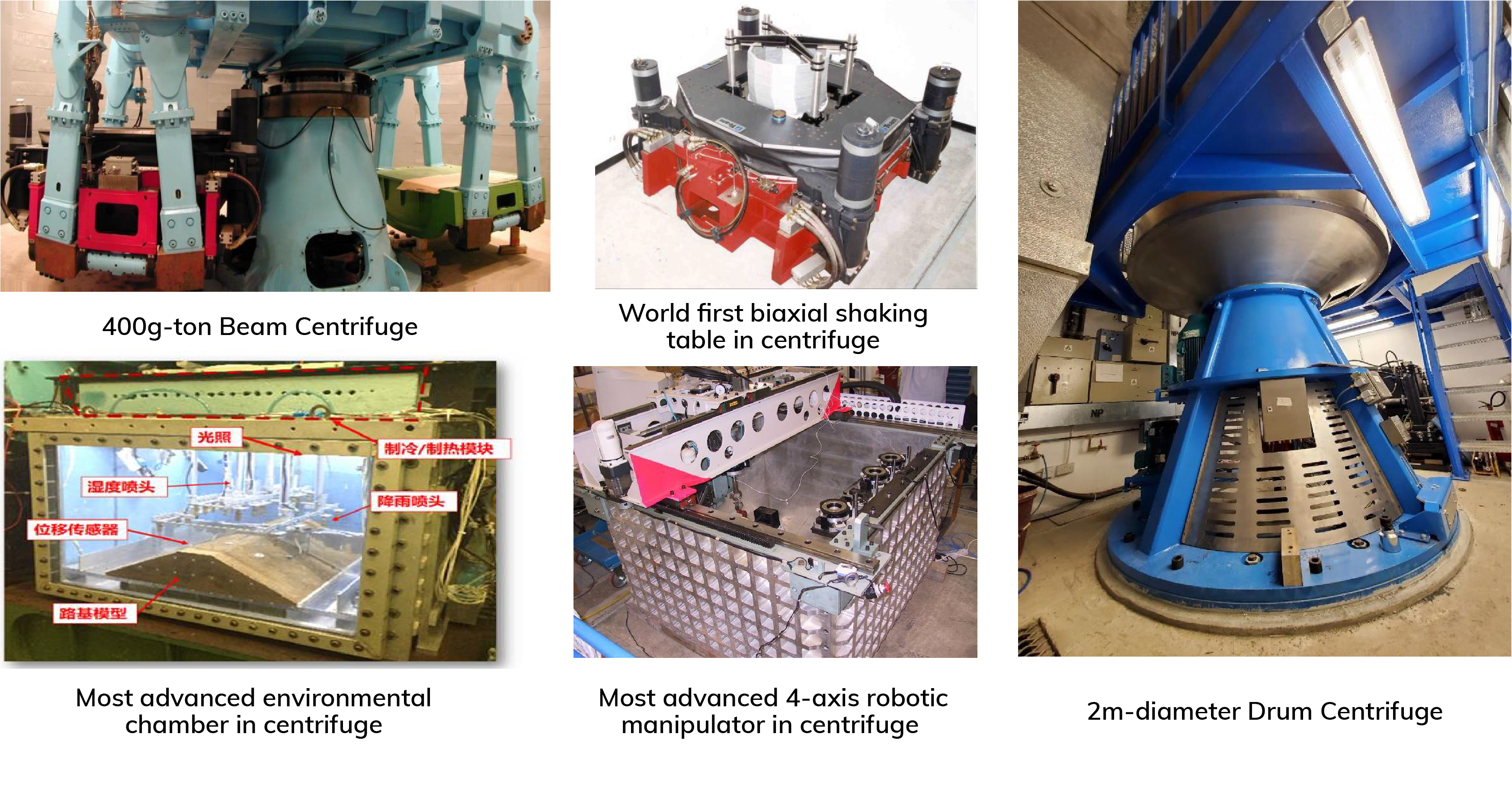
The advanced centrifuge testing equipment in the lab includes,
- Beam centrifuge with a model capacity of 400g-ton
- State-of-the-art drum centrifuge with a model capacity of 850g-ton, capable of generating a maximum centrifugal acceleration of 250g. It can simulate the evolution processes of geological hazards that occur with a prototype distance of up to 1,726 m, making it an indispensable tool for studying landslides and debris flows with long travel distance.
- World’s largest and most sophisticated four-axis robotic manipulator
- World’s first biaxial 2D shaking table
- World-leading environmental chamber for simulating the impact of climate change on infrastructure
- Advanced wave tank for modelling offshore, marine and coastal engineering structure.
Marine Hydrodynamic Research Facility
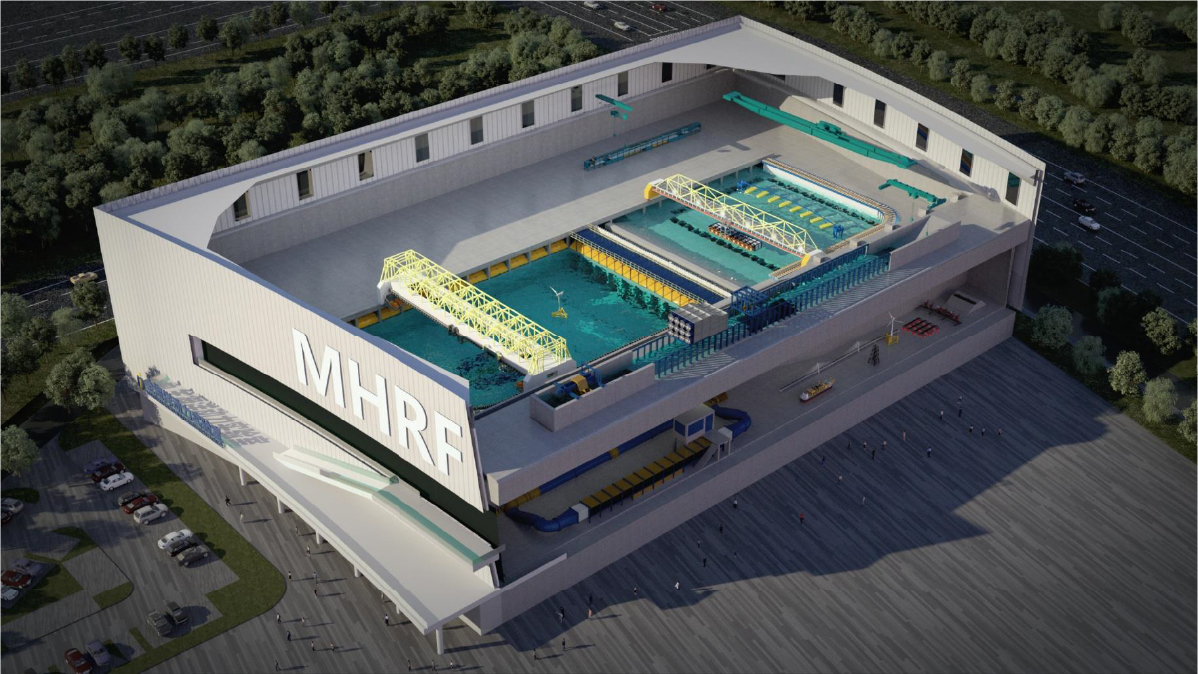
MHRF is a central research facility located at the Hong Kong University of Science and Technology (Guangzhou).
The facility has a world-leading deep-water modelling capability with the world's first combined deep and shallow water ocean engineering basin, O-Tube flume, a hydrodynamic flume, and a PIV flume. Deep-shallow joint ocean engineering test pool with a length of 101.5 m, width of 46 m, deep water depth of 10.4 m and a shallow water depth of 2 m is used for modelling extreme wind and wave conditions. The PIV flume is 30m long and 1m wide, with a water depth range of 0-0.8m, suitable for teaching and fundamental research.
Large scale Wind Tunnel
Aerodynamics and Acoustics Facility (AAF) at HKUST has established the world’s leading AI-based rapid wind field prediction system in the Greater Bay Area, providing a reliable basis for simulating urban disasters under extreme rainstorm conditions. This internationally advanced state-of-the-art low-noise wind tunnel is used to simulate the dynamic response of infrastructure under extreme weather conditions.
| Test Section Dimensions | 14 m (L) x 2.5 m (W) x 2 m (H) |
|---|---|
| Turbulence Intensity | < 0.12% |
| Flow Uniformity | < 0.4% |
| Flow Angularity | < 0.5 degrees |
| Working Temperature | Heat exchanger unit sets working temperature ~ 24 degrees celsius |
| Test Speeds | 2.5 m/s to 40 m/s |
| Background Noise | LAeq < 58 db at 5 m/s |
